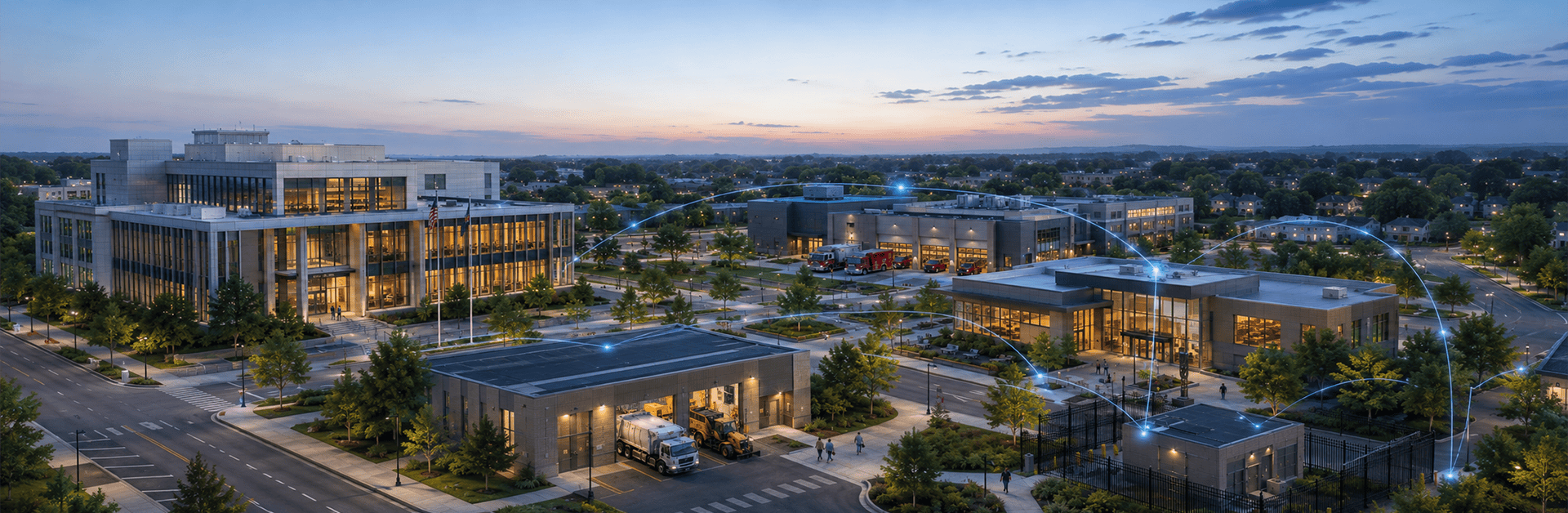
For state and local government organizations, 2027 will not simply bring another round of technology upgrades. It will bring a broader shift in how infrastructure is planned, operated and measured.
Artificial intelligence will place new demands on computing and data. Hybrid environments will become more interconnected. Security policies will need to follow users, devices and workloads across locations. Meanwhile, constituents and employees will continue to expect public services to be available, responsive and easy to access.
A successful digital infrastructure strategy for 2027 must account for these changes without creating more complexity. The goal is not to adopt every emerging technology. It is to build a secure, visible and adaptable foundation that can support new priorities as they develop.
Digital Infrastructure Will Become More Distributed
Government infrastructure has already expanded beyond the traditional data center. Applications and data may now operate across on-premises systems, cloud platforms, remote facilities, public buildings and edge environments.
In 2027, these environments will become even more connected. Agencies may process information closer to where it is generated, use cloud resources for variable demand and maintain on-premises systems for control, performance or regulatory reasons.
The result will not necessarily be a cloud-only operating model. It will be a deliberate hybrid model in which each workload runs in the environment that best supports its requirements.
This makes connectivity, interoperability and centralized management essential parts of Digital Infrastructure. Agencies will need an architectural strategy that treats the network, data center, cloud and edge as parts of one operating environment rather than separate technology projects.
AI Readiness Will Become an Infrastructure Priority
As government organizations evaluate artificial intelligence, many will discover that AI readiness begins below the application layer.
AI-supported services may require greater computing capacity, faster access to trusted data and reliable connectivity between users, applications and information sources. They can also create new requirements related to storage, governance, security and operational monitoring.
This does not mean every agency needs to build a large-scale AI environment in 2027. It means infrastructure decisions should avoid limiting future adoption.
Leaders should consider whether current networks can support increased data movement, whether systems can scale without disruptive redesign and whether information is organized well enough to support responsible automation. AI initiatives will be more sustainable when infrastructure planning, data governance and security planning move forward together.
Visibility Will Be as Important as Capacity
Historically, infrastructure planning often focused on capacity: more bandwidth, more storage or more computing power. Capacity will remain important, but visibility will become equally critical in 2027.
IT teams need to understand what is connected, how services are performing, where dependencies exist and which issues could affect users. That visibility must extend across hybrid environments rather than stop at the edge of the data center.
Better observability can help agencies identify performance problems earlier, understand resource consumption and make more informed investment decisions. It can also reduce the time employees spend moving between disconnected management tools.
The 2027 infrastructure environment should provide decision-ready information, not simply generate more alerts.
Security Will Be Designed Into the Foundation
The continued expansion of users, devices, cloud services and connected facilities will make perimeter-based security less effective as a primary model.
In 2027, infrastructure and security planning will need to become more closely aligned. Identity, segmentation, access control and policy enforcement should be considered during architecture design rather than added after deployment.
This approach can help agencies apply more consistent protections as users and workloads move between environments. It can also make modernization easier because security requirements are incorporated into the roadmap from the beginning.
A secure digital foundation should support the mission without making every interaction more difficult. The objective is to strengthen control while preserving reliable access to the services employees and constituents need.
Automation Will Shift From Convenience to Necessity
As infrastructure becomes more distributed, manual administration will become harder to sustain.
Automation can help government IT teams standardize configurations, deploy resources consistently and respond to common operational events. In 2027, its value will extend beyond saving time. Automation will become an important way to control complexity.
Standardized workflows can reduce configuration differences between locations and make routine work more predictable. Policy-based management can also help teams apply changes across larger environments without configuring every component separately.
The most effective automation strategies will begin with well-defined processes. Automating an inefficient process can reproduce the same problem at greater speed. Agencies should first determine what should be standardized, where human review remains necessary and which workflows will provide meaningful operational value.
Infrastructure Planning Will Become More Outcome-Driven
Technology refresh cycles will continue, but replacing aging equipment will not be enough to define a 2027 strategy.
Infrastructure investments should connect directly to outcomes such as service continuity, workforce productivity, constituent access, risk reduction and readiness for future programs. This changes the planning conversation from “What should we replace?” to “What must the organization be able to accomplish?”
A reliable roadmap should identify dependencies, establish priorities and sequence modernization efforts around operational needs. It should also account for lifecycle costs, staffing requirements and the ability to support the environment after implementation.
Netsync’s Technology Consulting services can help organizations assess their current environment, define modernization priorities and create a practical path from existing infrastructure to future capabilities.
Preparing for 2027 Starts With the Current Environment
The digital transformation expected in 2027 will not depend on one platform or one major deployment. It will emerge from a series of connected decisions about infrastructure, security, operations, data and service delivery.
State and local government leaders can begin by asking several practical questions:
Can the current environment support new applications without repeated redesign? Do IT teams have visibility across infrastructure domains? Are security policies consistent as users and workloads move? Can routine operations be standardized or automated? Are investments tied to measurable mission outcomes?
The answers can help distinguish between an environment that is simply growing and one that is becoming more scalable.
The strongest digital infrastructure strategies for 2027 will not chase every trend. They will create a secure and adaptable foundation that allows government organizations to modernize deliberately, respond to changing needs and deliver reliable services over the long term.
FAQ
What is a digital infrastructure strategy?
A digital infrastructure strategy is a long-term plan for connecting and managing the technologies that support an organization’s applications, data, users and services. It may include networking, cloud platforms, data centers, edge environments, security and operational management.
How will digital infrastructure change in 2027?
Digital infrastructure will become more distributed, automated and closely integrated with security. Organizations will also place greater emphasis on AI readiness, hybrid operations, real-time visibility and the ability to scale services without repeatedly redesigning the environment.
Why is AI readiness part of infrastructure planning?
AI-supported services may require additional computing capacity, reliable access to governed data, high-performance connectivity and stronger operational oversight. Preparing the underlying environment helps organizations evaluate and adopt AI without creating isolated systems or unexpected infrastructure constraints.
Why is scalability important for state and local government?
Scalability allows agencies to support changing service demand, new applications, additional devices and evolving constituent expectations without rebuilding the environment for every initiative. It also helps government organizations manage growth while controlling complexity and cost.
How does technology consulting support infrastructure modernization?
Technology consulting helps organizations assess their current environment, identify gaps, prioritize investments and develop a phased modernization roadmap. This planning can align technology decisions with operational requirements, available resources and long-term mission objectives.


